Where Not To Install This Alarm
For best Performance, It Is Recommended You Avoid Installing Smoke/CO Alarms in These areas:
-
Shall not be located behind furniture, drapes, or any other object where it might not be seen or heard
-
In garages, furnace rooms, crawl spaces and unfinished attics. Avoid extremely dusty, dirty or greasy areas.
-
Where combustion particles are produced. Combustion particles form when something burns. Areas to avoid include poorly ventilated kitchens, garages, and furnace rooms. Keep units at least 10 feet (3 meters) from the sources of combustion particles (stove, furnace, water heater, space heater) if possible.
-
Within 5 feet (1.5 meters) of any cooking appliance.
-
In extremely humid areas. This Alarm should be at least 10 feet (3 meters) from
-
In direct sunlight.
-
In turbulent air, like near ceiling fans or open windows. Blowing air may prevent smoke from reaching the sensors.
NOTE: This Alarm should not be installed within 36 inches of ceiling fans or supply registers.
-
In areas where temperature is colder than 40˚ F (4.4˚ C) or hotter than 100˚F (37.8˚ C).
-
In insect infested areas. Insects can clog the openings to the sensing chamber.
-
Less than 12 inches (305 mm) away from fluorescent lights. Electrical “noise” can interfere with the sensor.
-
Prolonged exposure to certain chemicals can impact the detector’s performance, please install this unit away from exposure to cleaning agents and other household chemicals.
-
In “dead air” spaces. “Dead air” spaces may prevent smoke from reaching the Smoke Alarm.
Avoiding Dead Air Spaces
“Dead air” spaces may prevent smoke from reaching the Smoke Alarm. To avoid dead air spaces, follow the installation recommendations below.
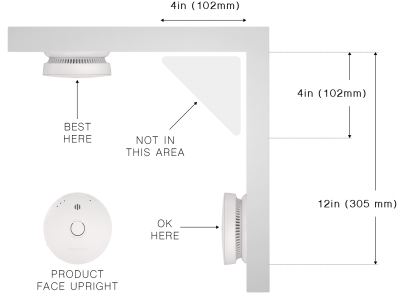
On ceilings, install Smoke Alarms as close to the center of the ceiling as possible. If this is not possible, install the Smoke Alarm at least 4 inches (102 mm) from the wall or corner.
For wall mounting (if allowed by building codes), the top edge of Smoke Alarms should be placed between 4 inches (102 mm) and 12 inches (305 mm) from the wall/ceiling line, below typical “dead air” spaces.
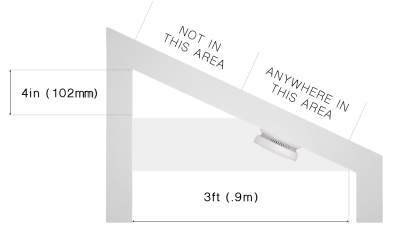
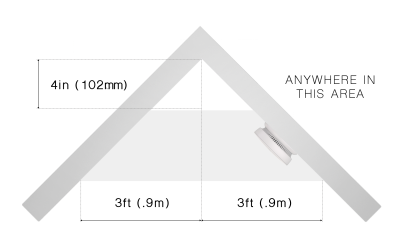
On a peaked, gabled, or cathedral ceiling, install the first Smoke Alarm within 3 feet (0.9 meters) of the peak of the ceiling, measured horizontally. Additional Smoke Alarms may be required depending on the length, angle, etc. of the ceiling’s slope. Refer to NFPA 72 for details on requirements for sloped or peaked ceilings.
For additional information, contact your local Authority Having Jurastiction (AHJ).